Good trampoline maintenance starts with a simple distinction: some checks apply to almost any backyard trampoline, while cleaning methods, replacement parts, anchoring, and weather procedures depend on the exact design. The universal part is observing the equipment carefully. The technical part belongs in the manual for the make and model you own.
Maintenance essentials
- Check the trampoline regularly for tears, detached pieces, wear, and other visible deterioration.
- If equipment is worn or damaged, identify the exact model and look for a compatible replacement part. The American Academy of Orthopaedic Surgeons (AAOS) advises discarding worn or damaged equipment when replacement parts are unavailable.
- Do not turn “regularly” into a made-up weekly or monthly rule. The AAOS guidance cited here does not set one universal interval.
- Use the exact manufacturer instructions for model-specific schedules and procedures. A current Consumer Product Safety Commission (CPSC) handbook makes that recommendation for public-playground equipment, although it explicitly excludes trampolines from its equipment scope; it is context for a manual-first approach, not a home-trampoline standard.
Start Here: When the Trampoline Should Not Be Used
Maintenance should begin with the decision that matters most: whether the trampoline is in suitable visible condition for routine use. Cleaning a mat or tidying the area should not take priority over a torn, detached, worn, or displaced component.
Quick stop-use screen
Pause routine use and identify what needs attention if you see any of the following.
Tears: A tear in the jumping surface or another fabric component.
Detachments: A part that has detached or shifted out of position.
Wear: Obvious wear or deterioration in a support, connection, or bounce component.
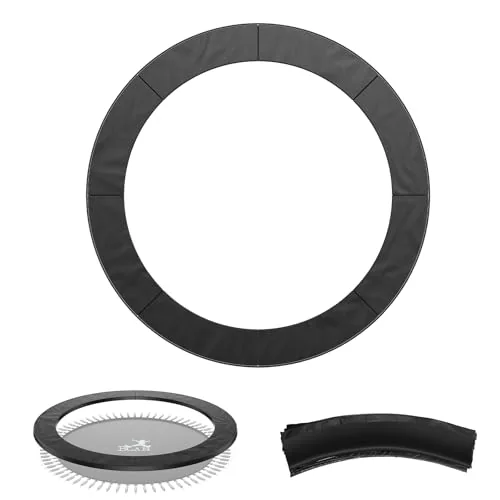
Padding problems: Protective padding that is missing, damaged, or no longer in the correct position.
AAOS guidance calls for regular checks for tears, detached pieces, and wear, and says protective padding should be in good condition and correctly positioned. A visible problem is therefore a prompt to stop and check the product documentation—not permission to improvise a structural repair.
Do not assume that any replacement part with roughly the right shape or dimensions is compatible. Confirm the manufacturer, model, and part identity first. If a compatible replacement is unavailable, AAOS advises discarding worn or damaged equipment.
Build a Maintenance Routine Without Guessing at a Calendar
AAOS tells owners to check trampoline equipment regularly, but the cited guidance does not define “regularly” as a universal number of days or months. A useful routine can still be organized around four kinds of checks:
- Before use: perform a quick visible-condition screen.
- Routine inspection: take a closer look at each component often enough to notice change rather than waiting for an obvious failure.
- Event-triggered inspection: recheck the equipment after prolonged inactivity or any event that could have changed its condition.
- Manual-specified maintenance: follow the intervals and procedures in the exact product documentation.
The first three categories organize attention; they do not create a technical service schedule. The fourth is where model-specific timing belongs.
The CPSC's 2025 Public Playground Safety Handbook says maintenance instructions and schedules supplied by the manufacturer should be followed for public-playground equipment. The same handbook says trampolines are not recommended for public playgrounds, so its inspection program should not be presented as a rule for a home trampoline. Its useful lesson here is narrower: the maker's instructions define the equipment-specific work.
Inspect the Trampoline by Component
Component check
Move around the trampoline systematically rather than looking only at the mat. Map the following categories to the parts named in your manual:
- frame, legs, and visible connections;
- springs, elastic rods, bands, or another bounce system;
- jumping mat;
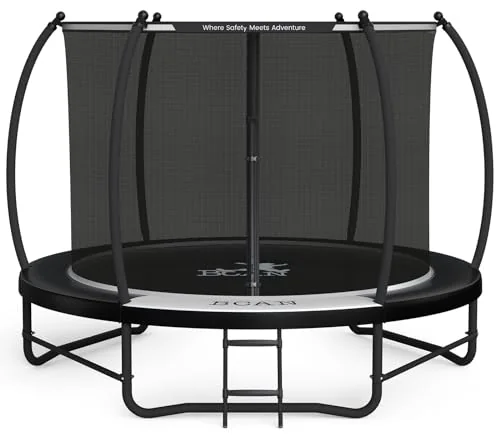
- protective padding;
- enclosure net, poles, entry, and attachments; and
- any ladder or model-specific accessory that affects access or assembly.
The list is intentionally generic. A springless trampoline does not share the same bounce system as a traditional spring design, and an in-ground installation adds components and site conditions that an above-ground frame may not have.
Frame, Bounce System, and Mat
Look for visible tears, pieces that have detached, wear, and deterioration. On the frame and connections, note parts that no longer sit as expected. On the bounce system, compare the condition and alignment of like components without assuming that a spring rule applies to rods, bands, or other designs. On the mat, inspect the surface and its attachment points rather than checking only the center.
This is an observation step, not a repair diagnosis. The cited independent guidance does not define a safe tear size, an acceptable amount of corrosion, a spring-stretch limit, or a universal service life. If something has changed, use the model documentation or manufacturer support to decide what the condition means.
Padding and Enclosure
Before use, confirm that protective padding over supporting bars and the bounce system is present, in good condition, and correctly positioned. Check the full perimeter: a pad can look acceptable from one side while being shifted, detached, or worn elsewhere.
Inspect the enclosure as its own component, but do not treat it as a substitute for the rest of the maintenance routine. AAOS cautions against relying on a safety-net enclosure alone. The mat, padding, frame, bounce system, and enclosure all need attention appropriate to the design.
Keep Cleaning and Weather Care Model-Specific
It is tempting to turn trampoline care into one universal recipe: one detergent, one brush, one pressure setting, one rust treatment, and one winter routine. The independent guidance cited here does not establish that approach across different mats, coatings, pads, nets, frames, bounce systems, and installation types.
For cleaning products and methods, covers, anchors, wind preparation, snow handling, storage, UV treatments, coatings, and lubricants, consult the instructions for the exact make and model. The CPSC public-playground handbook's manufacturer-first maintenance principle provides context for this boundary, but it is not a home-trampoline requirement.
Before following advice found in a general article, ask three questions:
- Does it apply to this trampoline's design and materials?
- Does the exact manual allow the product, tool, or procedure?
- Could it change a structural, bounce, protective, or warranty-relevant component?
If the documentation is missing or ambiguous, contact the manufacturer before proceeding. A shorter, model-correct instruction is more useful than a detailed universal procedure that may be incompatible with the equipment.
Decide Whether to Replace a Part or Seek Help
A conservative decision path
1. No visible problem: Continue routine checks and follow the exact manual's maintenance schedule. The manufacturer-first principle is used here only as contextual guidance, not as a CPSC home-trampoline requirement.
2. A part is worn, damaged, detached, or out of position: Pause routine use and identify the manufacturer, model, and affected part.
3. A replacement is available: Obtain a confirmed compatible part.
Follow the exact model instructions supplied for that part. The manufacturer-first principle is used here as context rather than a CPSC home-trampoline rule.
4. Compatibility or repairability is unclear: Contact the manufacturer or an appropriately qualified technician rather than improvising.
5. A suitable replacement is unavailable: AAOS advises discarding worn or damaged equipment.
This decision path does not define which structural repairs are acceptable. It keeps the owner's role focused on observation, identification, and use of approved documentation.
Adjust the Checklist to the Trampoline Design
The universal core remains small: observe the condition, pay attention to tears, detachments, wear, protective padding, and the overall component arrangement, then investigate visible changes before use continues.
The technical checklist must then match the product. A traditional spring trampoline, a springless system, an above-ground frame, and an in-ground installation can differ in component names, access points, installation conditions, and service procedures. Use the exact manual to translate the generic component categories in this guide into model-specific checks. The manufacturer-first maintenance principle is the relevant contextual takeaway from CPSC's public-playground guidance; the handbook itself does not govern home trampolines.
For an in-ground trampoline, that means this general guide should not invent pit-clearance, ventilation, or drainage procedures. For a springless system, it should not substitute spring inspection advice for the maker's instructions about its actual bounce components. Scope is part of good maintenance.
Keep a Simple Maintenance Log
Optional maintenance log
| Date | Component or area | Visible condition | Action taken | Part/model reference | Next manual-specified check |
|---|---|---|---|---|---|
The CPSC public-playground handbook recommends retaining inspection and repair records within its public-playground program. That is not a CPSC recordkeeping requirement for a home trampoline. Here, the log is simply an organizational aid: it can help an owner remember what changed, which compatible part was used, and which instruction or service record applies.
Keep entries factual and brief. “Pad shifted at north side; use paused; model label photographed; manufacturer contacted” is more useful than “looks old.” The goal is not to certify the equipment. It is to preserve the information needed for the next decision.
The Maintenance Rule That Matters Most
Treat visible condition as the first gate and the exact product manual as the technical authority.
Check regularly for tears, detachments, wear, and deterioration.
When equipment is worn or damaged, pause routine use, identify the exact part, and verify the next step; AAOS advises discarding the equipment if a replacement part is unavailable.
For procedures that vary by design, follow the manufacturer's instructions rather than a universal online recipe. The CPSC material cited here supports that manual-first principle only in its own public-playground context and should not be mistaken for home-trampoline regulation.
Maintenance cannot guarantee that a trampoline is safe or promise a particular lifespan. It can create a more disciplined ownership habit: notice changes early, avoid improvised fixes, and resolve visible problems before routine use resumes.